Entry #5
May 11, 2019
So much to cover. So little time to capture it all in words.
April at Heller High is a crazy month. We spent basically no time at Kibbutz Tzuba, instead going out for weeks at a time. I’ve decided to write a few paragraphs about each of the four main events that made up our April:
Poland: Please reference the other blog posts on this page.
Gadna:
For those of you who are unaware, serving in the Israeli army (IDF) for 2-3 years is a requirement for every citizen. Many kids often experience doubts about what the experience will be like, prompting the army to create a program called Gadna. Gadna is a program lasting from 3-7 days that mimics basic training and allows teenagers to understand what the first few weeks of their army experience will be like. Our program went to Gadna for three days; this was unfortunately such a short period of time that we were not able to learn how to fire a gun, but we had plenty of time to experience other aspects of basic training.
While at Gadna, we learned about how the IDF places extreme importance on values such as teamwork, discipline, effort, and punctuality. Our commanders maintained a very formal relationship with us to the point where we could ask questions if needed, but they were frequently so intimidating and apathetic that it was hard to approach them with personal issues. Over the course of the three days, we attended several military ceremonies, learned about the hierarchical layout of the army, did plenty of push-ups, and arrived on time to every single program. We experienced the terrible army rations (thank God I brought extra food), cleaned our tents and living spaces to perfection, and made sure our water bottles were so full that no air bubbles could be produced. We frequently had to stand in the exact same position for hours on end or risk having to do sets of push-ups. Nobody questioned the authority of the commanders (though we made fun of them later on).
Many of our activities were competitions among ourselves or among groups. We were carefully observed to make sure that during group activities, we worked as a team and didn’t blame others. During individual activities, we were often taunted (we were yelled at how there would be no prize for winning, how there was no point to competing, how we had so much more to go before we finished). We also learned how to crawl, react to a grenade blast, and how to effectively lead others. My favorite part of Gadna was the ending, when our commanders came out of their rooms smiling, laughing, and ready to introduce themselves (I didn’t know my commander’s name up until the very end). This is called “breaking the distance” and restored my faith that my commander was a human being capable of displaying emotions.
Gadna didn’t really influence my perspective on the IDF and whether I would like to make Aliyah (move to Israel), but it was certainly eye-opening to see the army firsthand.

Passover:
Most students had family or friends in Israel who they could stay with for the first two nights of Passover. I didn’t, and was assigned to a random host family with several friends.
Not much to say here. The Passover service was entirely in Hebrew. I understand some of it and was able to grasp what was going on in the Seder, but it wasn’t all that different that my Seder at home is. One thing that was interesting is that despite living in Jerusalem, my host family still said לשנה הבאה בירושלים (next year in Jerusalem), signifying how “Jerusalem” indicates more than the physical city but also the Holy Temple.
Most families in Israel only have one Seder instead of two. For the remainder of our time at our host family, we spent time in our room, playing Cards against Humanity with our host’s daughter, watching TV, or just relaxing. We honestly needed a break from our program’s jam-packed itinerary.
Passover wasn’t as different as I expected, being in Israel, but it was wonderful knowing that everyone in my country was celebrating the exact thing as I was and thinking the same things I was thinking. And it’s always amazing to be able to say חג שמח (happy holidays) to random people on the street.
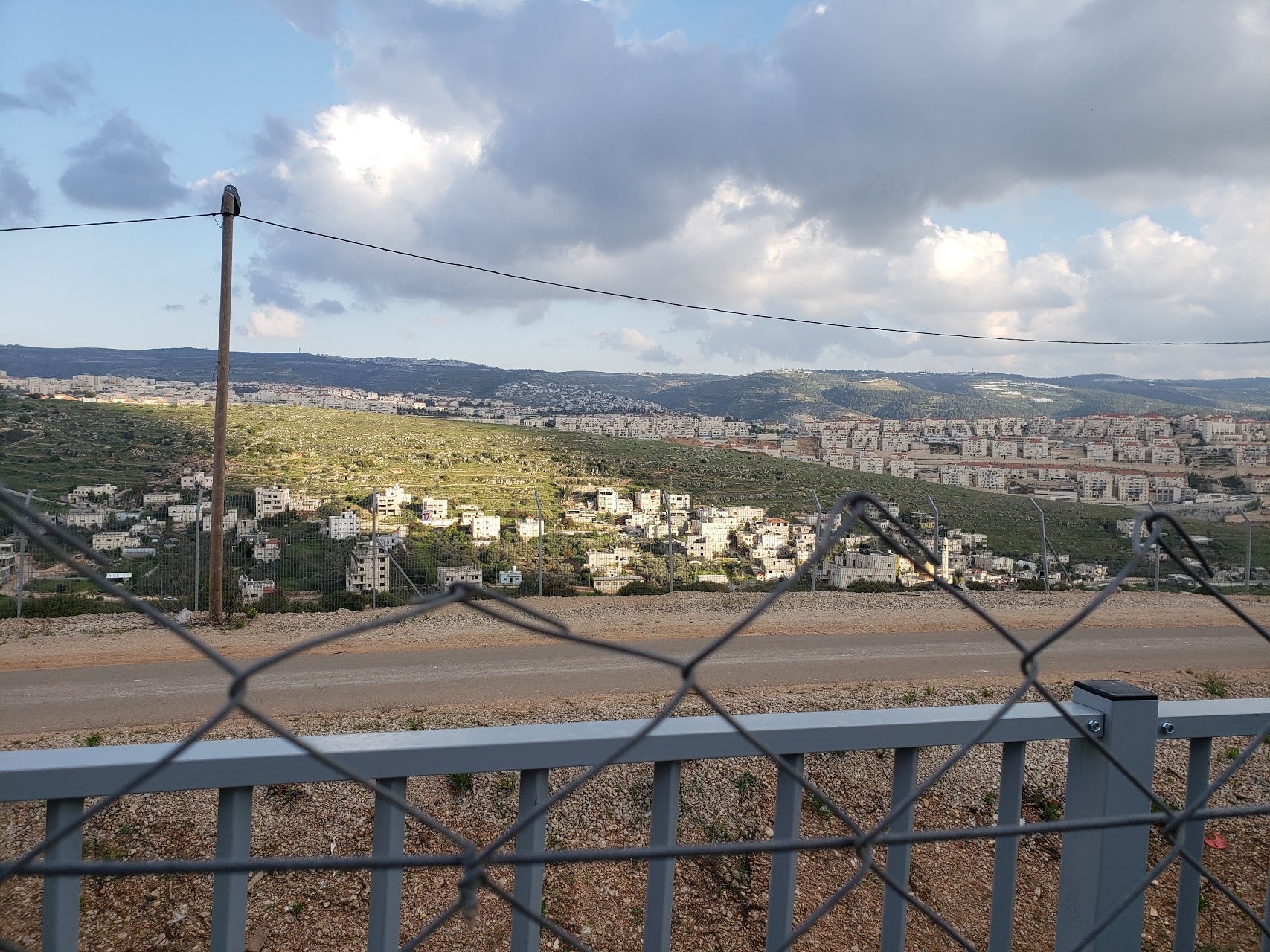
Oh yeah, and we snuck into the West Bank as a dare - it was right across the street from our host family’s house. Enjoy this picture of the West Bank as seen right from their balcony:
Yam Le Yam:
The main reason we had to spend time relaxing and putting on weight over Passover was because we drove directly from our host family’s house to the start of the Yam Le Yam hike. Yam Le Yam is a five-day backpacking trip from the Sea of Galilee to the Mediterranean Sea (hence the name of the trail, which translates to sea to sea). It’s normally 89 km, but we got seriously rained out of our first day, so we picked up part way through the hike.
Yam Le Yam is extremely popular among Israelis, primarily for the amazing views. My host family’s daughter had actually done the trail several times and sent me a full packing list so I could be prepared for the days to come. As a person who hates going to bed without showering, Yam Le Yam presented a challenge for me. I’ve backpacked and gone on serious hikes before, but this trail was with people that I didn’t know super well, involved 3-4 people sleeping in two-person tents, and was in another country.
As I said, we got seriously rained out on our first night, so we went to a place called the Canada Center, a recreational center a couple blocks from the Lebanon border. We actually had a good time as we were able to ice skate, jump in ball pits, swim, bowl, and work out for a few hours. It seemed the Madrichim felt guilty about what was about to happen to us, so they let us enjoy ourselves for half a day. It was also nice to sleep inside, even though our entire group was confined to one room and we needed to use the provided sleeping bags and sheets that we were going to use for the duration of the backpacking trip. Nobody slept much that night.
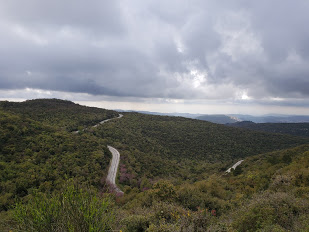
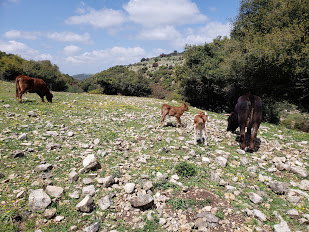
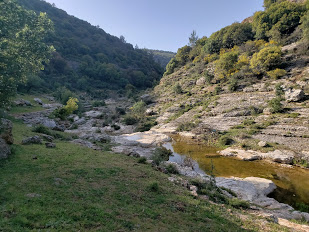
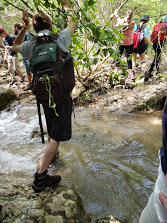
The following three days were spent hiking. We usually woke up around 6:30, had some hot tea, cleaned up our camps, put extra clothes, toiletries, etc. in a truck, loaded up our packs with lunch and other supplies, and walked for a while. We were divided into groups responsible for cooking our own breakfast and lunch, so we split up cooking and cleaning duties. I actually found myself enjoying listening to classical music while I walked, which was extremely relaxing when mixed with the gorgeous views. This also distracted me from my backpack, whose straps were so broken that all the weight was placed on my shoulders - thank God we weren’t responsible for carrying our tents or sleeping bags, only our cooking supplies and upwards of four liters of water. The first day was miserable for many of us, since it was raining and the clouds prevented us from taking in any of the views. After that, however, the weather improved and the beautiful scenery enabled us to really enjoy the experience. I’ve attached some pictures below:

One other interesting part of the trail was how it affected everyone’s attitude. I remember reading somewhere that to understand someone truly, you must take them camping in the wilderness and see if they get frustrated or lose their temper without access to the luxuries that we take for granted on a daily basis. I definitely saw this in some people, who distributed blame unfairly on others or remained miserable throughout the experience.
The final day of the hike was my favorite. We rented out mountain bikes and biked the remaining 10 km or so downhill until we arrived at the Mediterranean. The scenery was gorgeous and this was the first time I’d biked in three months - I am a huge biker and mountain biking is even more fun for me. I loved that day. We arrived at the sea around noon, had lunch, and had an incredible beach day.
The next weekend was spent at Kfar Blum, a small Kibbutz near the sea. The Madrichim gave us this time to rest up, have some fun, and overall have a relaxing Shabbat before returning back home to start the next school week. I definitely took advantage of this time, resting up and even cooking breakfast in the communal room. The overall layout of the boys’ building wasn’t unlike that of a frat house, and we treated it as such. After the exhausting hike we had just had, we all needed some time to eat proper food, turn the shower house into a steam room, watch a bunch of TV, go shopping and eat pints of ice cream, and participate in the Shabbat services. We then returned to Tzuba to begin our next week of school.
Yom HaShoah, Yom HaZikaron, and Yom Ha'Atzmaut:
Though this actually took place in early May, I thought I’d include some details on Israel’s Holocaust Remembrance Day, Memorial Day, and Independence Day.
Yom HaShoah was a very somber day. The air raid siren goes off once for a period of about three minutes during which everyone is supposed to stop what they are doing and reflect on the atrocities and lives lost during the Holocaust. Cars stop on freeways, people stop working - the entire country stands still for this period. The piercing siren made it hard to concentrate, but I willed myself to think about the poor people who lost their lives, including many people in my extended family. We also attended a Hebrew ceremony of many Kibbutz members, which, while short, touched me deeply, especially after hearing some of the accounts and also after hearing some of the beautifully sad songs performed by the community. Once again, it was amazing to be united with the entire country over something that happened to us as a people, even though it’s absolutely terrible what happened and I worked hard to maintain the solemn atmosphere.
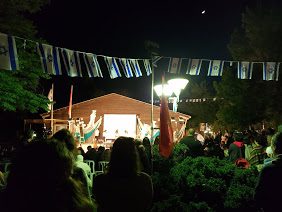
Yom HaZikaron, too, was extremely sad, though there was a slight mood shift. Israel’s Memorial Day was remarkably similar to the United States’ Memorial Day in terms of the mood and the service that I attended. Since Israel's struggles for independence and many wars with neighboring Arab countries are so recent, most Israelis have some connection with someone who died fighting for the country, making it a much more personal service. Like it is in the States, songs are sung, stories are told of fallen soldiers, and people do everything in their power to make sure people remember the soldiers. While 20,000 soldiers lost may not seem like a huge number when compared to figures from world wars, keep in mind that only 6.5 million Jews reside in Israel, many of whom share connections with those who died. At one of the two services I attended, mothers of fallen soldiers came to speak about their sons and the great sacrifice they made. This was a powerful day for me and for many others.
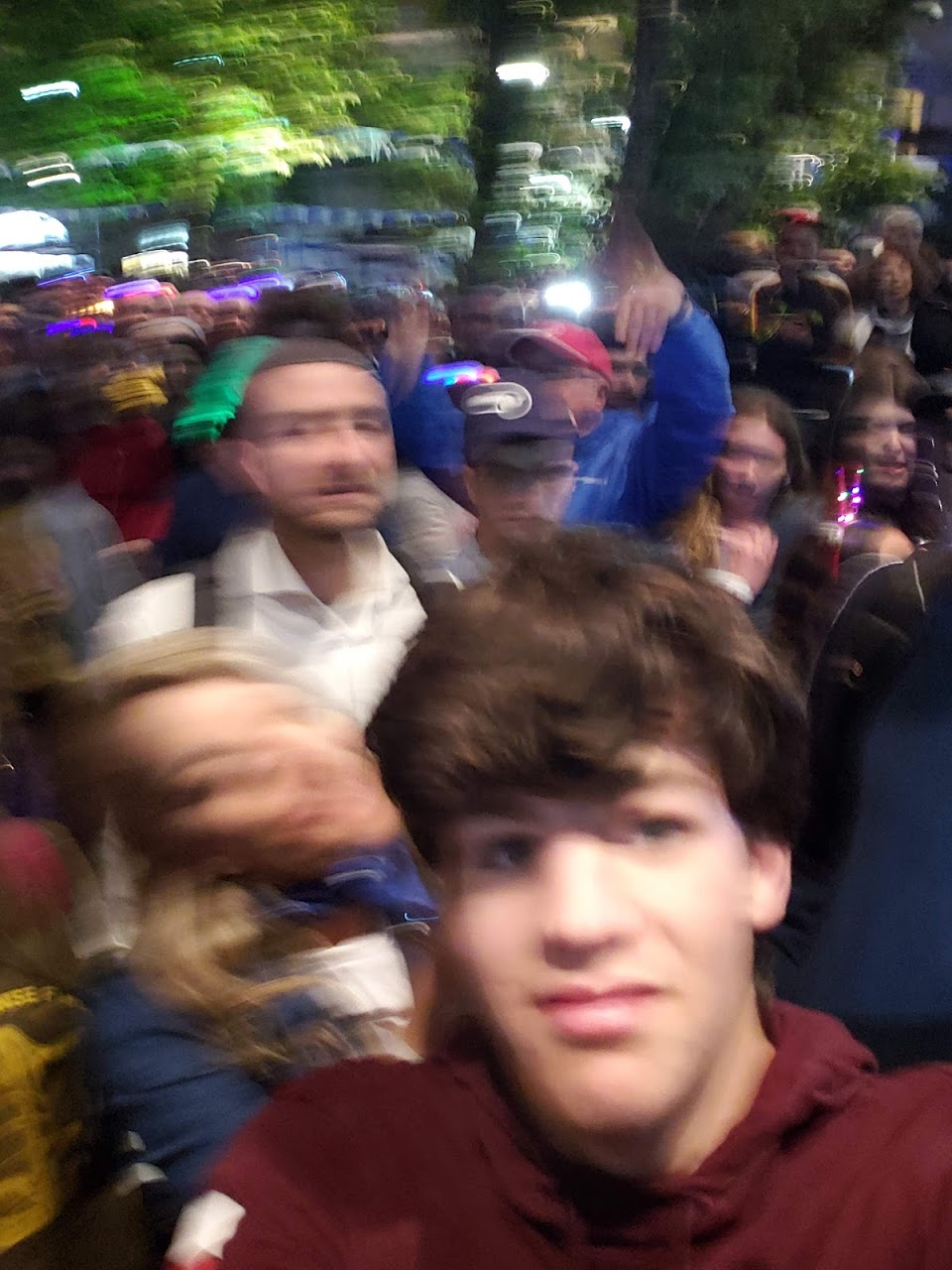
Yom Ha’Atzmaut, or Israeli Independence Day, was strategically placed right after Yom HaZikaron so that after everyone can take a day to appreciate the sacrifices made for our country, we can appreciate, in essence, our country. Yom Ha’Atzmaut does not even remotely compare to the Fourth of July in the States where the meaning of the holiday is lost amid pool parties and fireworks. Here, everyone is collectively happy for one reason - we are independent. The pure joy exhibited by every single person made me so happy, and proved to me that even after two days of grief, we are still a joyous people. I had an incredible time going to Ben Yehuda street, which was full of mosh pits, dancing, and food and drink. Even the most reserved students on the program had no problem getting sucked into the mosh pits and jumping up and down to some classic Israeli tunes. We went to the beach the day after, as well, which was extremely fun since the hide tide made swimming a real experience. We also had a sports day, where each of four teams we participated in various beach activities. We then had a delicious lunch and time to relax afterward at the Kibbutz. I could really get used to this lifestyle.
Enjoy some pictures from Yom HaZikaron and Yom Ha’Atzmaut:
Thank you so much for reading this article. I apologize for my lack of posts lately. Please call me, I want to catch up with all of you!