
Entry #3
March 10, 2019
Note: This blog post is actually being submitted as an assignment for my Jewish History class. It’ll follow a different structure and will also be publicly accessible on my teacher’s website.
While I usually don’t enjoy waking up at 6:15 in the morning, I can definitely say that going on the Oral Law Tiyul to Beit Sha’arim and Beit Alpha was not only an enlightening experience, but was also one of the few tiyulim I’ve been on that has really piqued my interest. We woke up fairly early in the morning, hopped on the bus, and drove north for nearly two hours until we arrived at Beit Sha’arim.
Beit Sha’arim, located in northern Israel, contained well-preserved remains of ancient burial caves. Located there were the coffins of many influential Rabbis of the Sanhedrin, the members of the ancient Rabbinical courts - these caves were from the 2nd century CE. The Sanhedrin frequently moved around Israel in pursuit of a better economy and Beit Sha’arim was an economically strong location. It was also where the Mishna, or Rabbinical (Oral) law was codified by Rabbi Yehudah HaNasi in 200 CE. The Mishna is an extremely important piece of Jewish text, because since so much of the Torah is hard to interpret or outdated, the Mishna is what connects it to us. In essence, it’s the bridge that connects the Jews to the Torah. I strongly believe all Jews should be educated about the oral law.
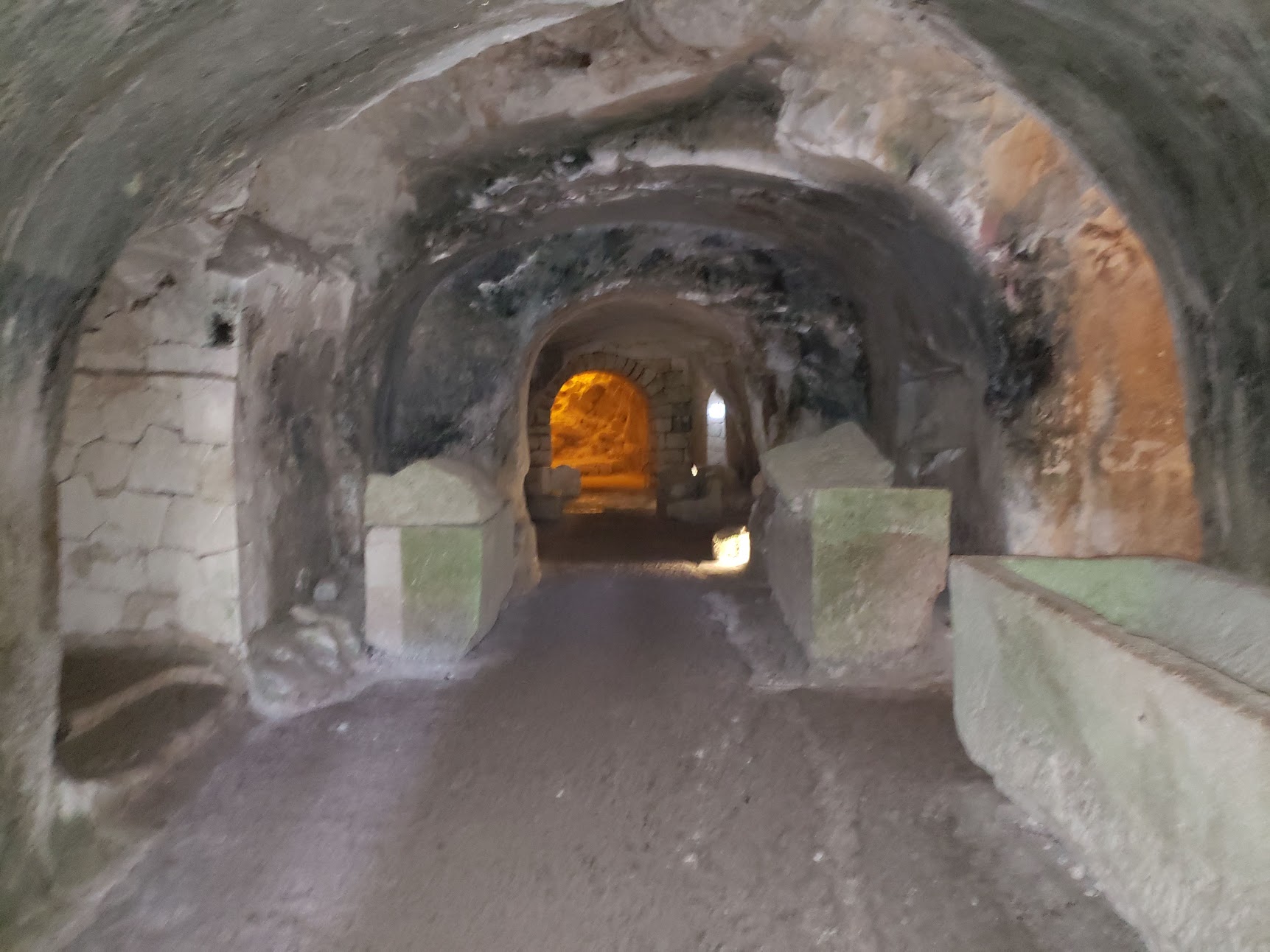
Beit Sha'arim burial caves
What was shocking about the burial caves is they depicted the influence that other ethnic groups had had on the Jews. The burial caves, which were the resting places of some of the most influential Rabbis at the time, showed images depicting a Greek god and other animals. Images of this kind are strictly prohibited by Jewish law, being considered avodah zarah, or idol worship. Shockingly enough, this was replicated at a synagogue in Beit Alpha that was built in 530 CE that depicted Roman influence. The synagogue’s mosaic floor, far from being an artistic addition, further depicted avodah zarah and really made me wonder about the power of assimilation -- if the Jews willingly integrated Roman and Greek customs into their religious life, what does this say about human nature and how likely we are to adopt other traditions or customs just because they’re present in our life? American Jews, for example, are already acculturated; many observe non-Jewish holidays such as Halloween simply because they are a part of America’s culture.
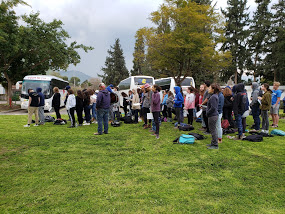
Holding a prayer service outside the Beit Alpha synagogue
Overall, I’m really happy I was able to go on this tiyul. It was not only extremely interesting and allowed me to connect to the content covered in class, but I believe it has a strong modern-day application - it called into question the influence that other groups can have on us. While by no means should be turn away from other cultures and curiosity should be welcomed, it’s important to stay loyal to our values and to avoid making sacrifices for social acceptance. Not to mention, we were able to go swimming with fish during our lunch break!
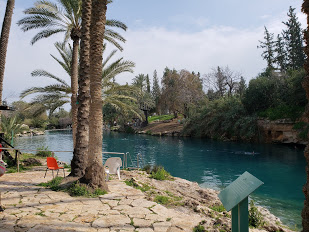
Swimming with the fish in a natural reservoir
This tiyul took place on March 5.